Ken Hall Podcast Interview
Talk to the nGenue Team
Our specialists help natural gas teams improve forecasting, scheduling, nominations, and commercial operations.
- Guided walkthrough of nGenue
- Answers tailored to your workflows
- Learn best practices from experts

Learn from CEO Ken Hall’s Interview with OGGN
Paige Wilson:
Welcome back to another episode of Oil & Gas Industry Leaders Podcast. Let’s get into it and introduce this week’s guests. I’m sitting here today with Kenneth Hall, Chief Executive Officer of nGenue.
Welcome to the show, Ken. Let’s discuss how you began in the oil and gas industry.
Ken Hall:
It started with a bang.
I think Enron collapsed and I graduated with a degree in computer science. It was an interesting experience. I found myself in the Y2K hustle and bustle, getting interviews all over the place.
I thought I was going to make a million dollars starting out. And the reality set in that things were a little hard in Houston. I found myself engaged with a little-known company at the time called OpenLink.
They’re part of the Ion family. I started there as a software developer and got kicked off then.
The Origin of nGenue
Paige Wilson:
Awesome. Let’s talk about where you are right now and what you guys do.
Ken Hall:
nGenue is a company I co-founded with my brother, David. It’s solving a real big hole within the industry. It’s something I’ve seen over the previous 20 years or so.
We decided to get involved. It’s around the whole natural gas retail and wholesale supply chain. It’s something we felt very passionate about.
Paige Wilson:
What was the tipping point? What made you go, okay, I’ve been through all of this, now it’s time for us to do our own thing?
Ken Hall:
I was responsible for the technical services, solving mostly natural gas and power and other commodities throughout the industry, challenges they faced. One of the consistent problems I encountered was that we were trying to solve problems in the natural gas space.
We thought we had a pretty good handle on how it worked. We solved lots of problems on the wholesale side, but when it came to the retail side, it was a disaster. I met company after company and had conversations.
They consistently said we fell short in that area. I had a coworker tell me there is a company she used to work with that did exactly what the industry was asking for to be solved. I approached the owner at the time, and he was ready to hand the reins off to somebody else.
I actually tried brokering a conversation with Openlink or Ion at the time. I made the introductions to see if maybe there was a potential acquisition. Unknown to me, there were lots of activities already underway.
Ion was in the midst of trying to acquire Openlink. That was a no-go line. My leadership didn’t have an interest at that time. I half-jokingly, half-not said, what if I acquired it? The owner at the time was interested and open. He’s still with us today. That was 2017. We came to handshakes.
Paige Wilson:
What exactly do you guys do?
Ken Hall:
We provide the only software platform specifically built for utilities and marketers dealing with the wholesale and retail side of things. In industry terms, we support the full life cycle of natural gas marketing from trading and transportation to customer billing and reporting. It’s basically the buying and selling of the wholesale side and trying to figure out how to get it to the end users and provide all of those counterparties invoices.
Paige Wilson:
That’s great. Let’s get into the leadership portion. Ken, what is leadership to you? It’s different to everybody.
Leading nGenue
Ken Hall:
I started my career as a technologist, a software developer. I look at things more from doing first.
I guess some people call that a servant leader. I love to lead by example. I like to get involved.
I like leading a circle of equals. I like to listen to lots of people in the room and ensure that the right answer is always selected and minimize the politics because sometimes that gets in the way. If I had one superpower of leadership, it’s trying to make the right decision agnostic to what I personally want or other people want, trying to reach that right decision.
Paige Wilson:
Being a leader is hard and it’s great. There’s a lot of rewards. There’s a lot of difficult tasks that have to be done. What is an example of a difficult experience you’ve had?
Ken Hall:
Probably amongst the most challenging pieces are when you have people you really like and respect that end up coming to conclusions contrary to perhaps the best interest of your customers or co-workers. That’s a very difficult situation.
Everybody has their own biases, their personal needs and such. It’s one of those things as a leader when you encounter something like that, your first objective is to make sure you take care of your customers, and you have to make calls that sometimes seem a little less friendly. But you do that in the organization’s interest and the customers and all the rest of the team.
Paige Wilson:
But what is an example of a rewarding situation?
Ken Hall:
You know, this is probably a little specific, but we have team members all throughout the United States and teams overseas. And one of the most rewarding experiences has to do with people who haven’t historically been recognized.
They’ve been the quiet people who work very, very hard in the background and nobody usually notices them because they plug away. The extreme introverts. And so since we consist of both extroverts, former people in the industry as well as technologists who are extreme introverts, I find extreme pleasure in finding those people who really make the machinery work providing the high value to the customers that oftentimes would have never been recognized.
And so, we’ve had a couple of those situations in the past couple of years where I’ve elevated people who would have, in any other organization, not been elevated. And so that brings me great joy because teammates around have recognized, “Hey, that was the right call. You made me feel good about this.”
You didn’t go with the person who squawked the most. You went with a person who really influenced the team.
Never Give Up. Never Surrender!
Paige Wilson:
Thank you for sticking up for my people. Believe it or not, I am incredibly introverted. Take people by surprise on that one.
So with all of your experience in the industry and all the things, different things like you’ve gone through, even coming into it with the whole Enron ordeal, what is a piece of advice you would give to our audience?
Ken Hall:
Probably the cornerstone of my philosophy is, a funny show. If anybody hears this, they’ll know what show it is.
Maybe you won’t, but it’s, “never give up, never surrender.” It’s encompassed in the concept of grit. The industry is tough.
You know, there’s lots of ups and downs, and sometimes the ups are huge and the downs are huge. And it takes a little bit of gray hair. I mean, I actually do have some gray hair.
It doesn’t show up here, but it takes a bit of experience to recognize there’s an average amongst them. You know, when the highs are high, don’t take it so high. When the lows are low, don’t take it so low.
Just keep plugging away. Just keep plugging away.
Paige Wilson:
This industry is so slick, and you never know what’s going to happen next.
But I think a lot of people that have stayed in the industry through the ups and especially the downs have that grit and will continue. So that’s great. Do you have a book that has influenced you?
Ken Hall:
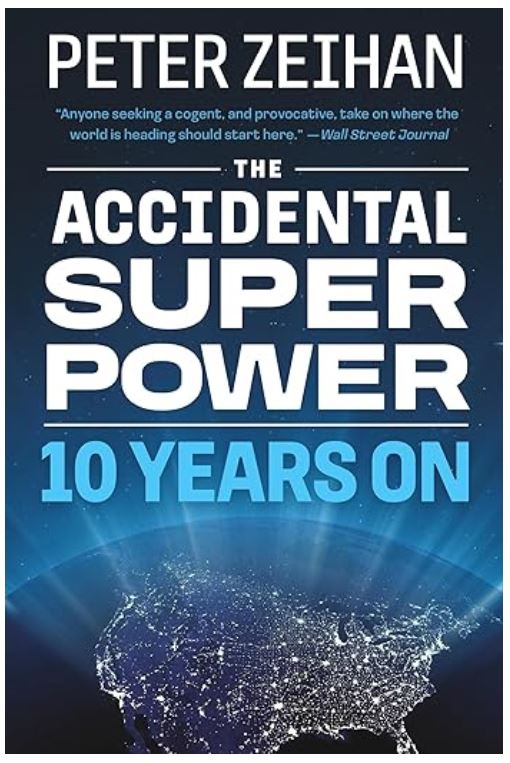
I do. It’s actually pretty interesting. I went to a convention, and during that convention, there was a speaker, and his name was Peter Zeihan. And he had one of the most incredible presentations. It was, I think, 2014. And he stood up in front of the audience, and he said, “Russia is going to invade Ukraine.”
Of course, it was pretty prophetic right now, but at the time, it was like, really? No, that’s not going to happen. He said this is 2014.
The other thing he said is that natural gas is going to revolutionize the entire industry. There’s a lot of things during that conversation that were pretty interesting. To tell you the truth, it actually quite impacted me, so much so that he was handing out copies of his book, and I read that book, and then he came out with two subsequent books about those.
They’re fantastic. I didn’t take it for any information or insight in the Russian situation, but I did take it as a well-articulated support in the expansion of what was happening which is the natural gas industry expanding in the United States and its influence in the world. It was part of a concept in the back of my head, because I have lots of commodity experiences, natural gas being at the top.
I found it very interesting that it sounded very logical, that a lot of my experience seemed like it had a future when some people thought it was going away at the time.
Paige Wilson:
It’s called The Accidental Superpower, right? What is the accidental superpower exactly?
Ken Hall:
That’s right. So it’s actually a pretty interesting take on the United States as the world’s sole superpower right now, and why it became the superpower. And it was less to do with the right people in the right time and having to do with a lot of the geography and a lot of the natural bounties that were in the United States that made cities easy as they rested on navigable waterways and such.
So it was a very impressive take on that. It’s been done before, Guns, Germs, and Steel, have looked at similar concepts, but it took it further. It went into the current day and age, and it looked out into the future, and it showed how the expansion of the natural gas infrastructure in the United States was going to continue on and provide prosperity and feedstock to industries.
Paige Wilson:
I’ll make sure to put that in the show notes so people can go check that out. Sounds super interesting. What are the other two books you bought?
Ken Hall:
The next one was The Absent Superpower. It basically predicted the United States stepping back from being the center of globalization and imposing its view on things and becoming more isolationist, doing things like tariffs. It had some interesting concepts in there.
The final book was something on the order of, I don’t remember the exact name, it’s like the beginning of the end of the world or something like that. So each one of the names was more diabolical than the next. It was interesting.
Paige Wilson:
What would you say is your most used business tool? I mean, you’re a man of technical things. Your company is based on tech. What do you use every day that isn’t, that’s not as normal as everyone else?
Ken Hall:
You know what? I’m probably not as normal as any particular CEO, but as a technologist, I don’t think this is too abnormal.
Excel is a tool I use quite frequently, because I have lots of ideas, lots of thoughts, lots of scenario analysis that I do. And it keeps me accountable for things I think through. And I can pare things down, I can run metrics, I can run numbers.
It’s probably my primary personal tool. I didn’t mention this when you said this, but I’m an extreme introvert myself. I love getting along with people. I’m great in a crowd. I’m great with people. But if I was given a choice, I would sit down with a book or a piece of technology and get in.
nGenue vs. Excel
Paige Wilson:
Oh, absolutely. Powered up by yourself. 100%. Yeah. Yeah. I appreciate that. And I also appreciate that you use Excel a lot. I love Excel. I know that’s the nerdiest thing that’s come out of my mouth as of this week. But yeah, no, I love it too.
Who would you say, Ken, is your most respected competitor? Is that applicable?
Ken Hall:
Did I just mention Excel? Yeah, I mentioned Excel, and that’s probably it. We like to say our realistic, most respected competitors are our prospect and customers’ internal IT departments. What ends up happening is a lot of utilities, a lot of marketers, a lot of large end users, a lot of companies out there have a lot of these challenges, and they end up starting with Microsoft Excel.
And then eventually somebody says, this is getting really complex. They turn it over to their IT departments and they try solving individualized problems, connecting those individual tools together, and it becomes a beast. Somebody moves on.
Nobody knows the details, the history. And then it becomes this behemoth that these IT departments need to maintain without some of the historical context. We come in, and often companies feel like their business is super proprietary, which it absolutely is.
It’s sometimes hard to believe we have a tool that’s configurable, understands the industry, the different geographies, how the rules apply to those geographies, and how we can make their life easier.
Paige Wilson:
Normally my next question is, what makes your company better than competition? But I don’t know. Do you want to talk crap about Microsoft?
Ken Hall:
Yeah, Microsoft Excel is absolutely phenomenal. But the trick with that, as anybody who’s used that knows, is you look at a formula, look at some outputs, and then one day you say, “Hey, that number doesn’t change.”
Why doesn’t it change? You look in there and say, oh, somebody fingered and typed over this formula with the number. We’ve been using that for how long? Who knows? One challenge of Excel is that it doesn’t have this history. It doesn’t have an audit trail.
It doesn’t have these, you know, protectionist pieces you can introduce very easily without going down the path of becoming a software company. And so that’s usually the pivoting point where typically companies ask themselves if they want to become a software company or do they want to remain a natural gas company and leverage an experienced entity out in the industry?
Paige Wilson:
So what would you say is your most important lesson learned?
Learn from your customer
Ken Hall:
Most important lesson learned is: Don’t presume you know more about the business than the customer. We come with a lot of industry knowledge and all the time we come into new experiences, new challenges, new ways of viewing things. We might be able to handle 70-90% of the scenarios, but there are always these things that come up, especially with the larger companies out there, that offer some new perspective on how they’re looking at the natural gas marketplace. It’s a great lesson that we can learn.
Since we focus entirely on natural gas, we take those lessons; we make them a little agnostic to any particular company, we can make them additional capabilities in the system that become options out into the future. We just love learning and listening to our customers.
Paige Wilson:
What about on a personal level?
Ken Hall
On a personal level, running a company is probably one of the most humbling things that I have ever done.
Being a software developer for probably a decade, made me feel like I was the smartest person in the room. Being a CEO for a decade made me feel like I needed to find the smartest people in the room. So it was, it’s the best personal lesson I have learned: find those you trust who have respected knowledge in particular areas and empower them, support them, guide them and be their champion behind the scenes.
Paige Wilson:
So how can your role now, Ken, be important to the future of the oil and gas industry?
Ken Hall
I consider myself to be at a point where we can actually revolutionize how the retail natural gas space currently operates. Right now, what happens with a lot of natural gas companies is they will have different software which deals with their wholesale risk, pipeline schedule, some kind of billing concept or utility communication or different tools and commissioning. They’ll have lots of different tools that handle different parts of things.
And it becomes really inefficient. Lots of people have to do extra work in spreadsheets and custom-built software.
If you look across the world, that creates such a burden on ultimately delivering natural gas at the best possible value you can. If you’re able to make that very efficient and you’re able to increase your margins, not only does that increase the margins for the companies dealing with these, it allows these companies to provide better pricing to their customers and ultimately make natural gas affordable for everyone.
Paige Wilson:
So what are your thoughts around telling someone that maybe doesn’t know about this industry? How, how to understand what we do?
Ken Hall:
The simple way of looking at it is there is a need for cities and large organizations to get natural gas. And somebody has to talk to the producers of natural gas to get that natural gas from those producers to the cities or the large facilities. And that is a complex chain of phone calls and buys and sells.
And how do I get there and navigate the pipeline systems to get to that city gate or to get to that facility?
Paige Wilson:
What if pipelines are bad? Or what if I think what the oil and gas industry is doing is bad?
Ken Hall:
I like that question, and it’s best answered by a show I saw, Landman.
Billy Bob Thorton was talking to one of the lawyers out there who was disparaging the energy industry. And he responded with something on the order of, look, I didn’t make this industry. This industry was built by our grandparents, right?
We either feed the machine or it stops working and everything we know and love disappears. So right, wrong and different. This is the land we live in today.
And I’m all about the future of technology and improving efficiencies and all those things. But the reality is, everybody needs their cars and cell phones to operate.
It’s just the reality of where we are, and we can all like it or dislike it equally, but we have to understand the reality.
Paige Wilson:
Yeah. I feel like this is something we’ll have to explain and, you know, forever.
Ken Hall
It will be because there’s a positive concept behind the idea of doing well for the environment. And that’s great, but it also has to get married with the math and the metrics and the realities.
Paige Wilson:
Absolutely. So to kind of wind this down, do you have a favorite podcast?
Ken Hall
It’s Joe Rogan. I watched a good number of those episodes. It’s a very common podcast people like, but that’s my favorite.
Paige Wilson:
Which is, do you have a favorite guest he’s had on? Mine’s usually Shane Gillis.
Ken Hall
You can’t go wrong with that guy. He’s hysterical. Just off the top of my head, he’s probably amongst my favorites.
Paige Wilson:
He’s one of my favorite comedians.
Ken Hall
He’s very smart in his approach to things.
Paige Wilson:
Thank you so much again for joining me today, Ken.
If people want to reach out to you and, or get to know more about your company, how might they go about doing so?
Ken Hall
The easiest way is nGenue.com.
Paige Wilson:
That concludes this episode. So just remember it’s up to you to open the next door.